pressure-washing
How Much Does Pressure Washing Cost in New Jersey? A 2026 Price Guide for Siding, Decks, and Driveways
How much does pressure washing cost in New Jersey in 2026? Per-surface prices for siding, decks, pavers, and roofs, plus 13VH contractor rules and timing.
In This Article
How Much Does Pressure Washing Cost in New Jersey? A 2026 Price Guide for Siding, Decks, and Driveways
Most New Jersey homeowners pay between $250 and $650 for a full exterior house wash in 2026. Driveways and walkways add $150 to $400. A two-story colonial in Bergen County with a deck, a paver patio, and a long driveway typically lands somewhere between $700 and $1,100 for the whole property.
Those numbers move with square footage, but in this state they move just as much with geography. A shore house in Brigantine collects salt film and black mildew at a rate an inland Hunterdon County farmhouse never sees, and the extra chemistry and rinse time show up in the price.
Pricing methods differ too. Some companies quote per square foot, usually $0.15 to $0.45 depending on surface, while others quote a flat number per structure. Neither is better, but comparing a per-foot bid against a flat bid without knowing the measured area is how homeowners end up confused about who is cheaper.
Prices by Surface, With What Moves Them
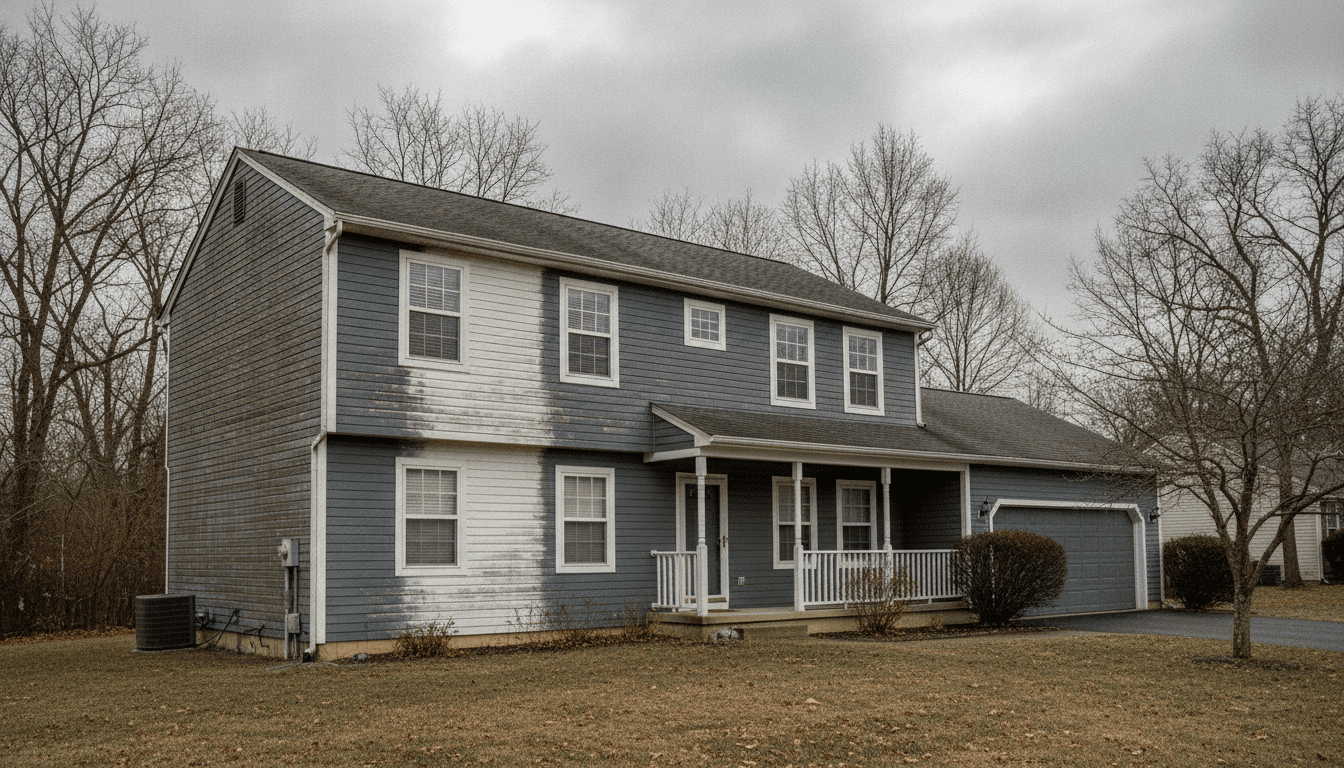
Vinyl siding is the least expensive surface to clean because it takes a low-pressure soft wash rather than mechanical scrubbing. A single-story ranch of about 1,200 square feet runs $200 to $350. A 2,500 square foot colonial with dormers and a second-story rear elevation runs $400 to $650, and the increase is mostly ladder and reach time.
Concrete is priced by area and by how badly it is stained. A standard two-car driveway of roughly 600 square feet runs $150 to $300 for a straight cleaning. Rust from a well line, oil from a leaking transmission, or embedded tire marks push the same driveway to $350 or more because those need separate chemical treatment.
Pavers and Belgian block are their own category. Cleaning alone runs $0.35 to $0.60 per square foot, and re-sanding the joints with polymeric sand adds $0.50 to $1.25 per square foot. Sealing after that runs another $0.75 to $1.75. A 500 square foot paver patio taken through all three steps can reach $1,500, which is why plenty of homeowners stop after the cleaning.
Wood decks and fences price between $1.50 and $3.50 per square foot when the job includes cleaning and brightening. Add staining or sealing and you are at $2.50 to $5.00. Pressure alone on old cedar or pine will fuzz the grain, so a good contractor uses a cleaner, low pressure, and a neutralizing rinse.
Roof cleaning is priced separately and almost always as a soft wash. Expect $0.30 to $0.75 per square foot of roof area, or roughly $500 to $1,200 on a typical New Jersey colonial. Those black streaks are a cyanobacteria called Gloeocapsa magma, and high pressure on asphalt shingles strips granules and voids most manufacturer warranties.
What Makes New Jersey Exteriors Dirty Faster
Humidity does most of the damage. Summer dew points along the coastal plain sit in the upper 60s and low 70s for weeks, and north-facing walls that never get direct sun stay damp long enough for algae to colonize the surface. That green film on the shaded side of the garage is the same organism year after year.
Salt is the shore variable. Homes within a few miles of the ocean in Monmouth, Ocean, Atlantic, and Cape May counties accumulate a salt haze that holds moisture against the siding and accelerates growth. Those houses often need cleaning every year rather than every two or three.
Pollen adds a spring layer that most people notice on cars first. Oak and pine pollen coat siding and screens across the state from late April into early June, and washing before that ends means doing it twice.
Then there is road grime. Homes fronting county roads or anything near I-287, Route 1, or the Parkway pick up a gray brake-dust film on the street-facing elevation that the back of the house never gets. Contractors sometimes price a partial wash for exactly this reason, and it can cut the cost by a third.
Soft Washing Is What Most Jersey Homes Need
Soft washing runs water at roughly 100 to 500 PSI along with a cleaning solution, usually a diluted sodium hypochlorite mix with a surfactant. It kills the organic growth rather than blasting it off, which means the siding stays clean longer than it would after a pressure-only rinse.
High pressure, meaning 2,500 PSI and up, belongs on concrete, brick, and block. Pointed at vinyl it drives water behind the panels and into the sheathing. Pointed at stucco or EIFS, which shows up on a lot of newer construction in central Jersey, it chips the finish coat and creates a repair bill far larger than the wash.
Ask any bidder which method they plan to use on each surface and what they do to protect landscaping. Sodium hypochlorite kills plants at working strength, so pre-wetting beds, tarping, and rinsing afterward are part of a competent job. A contractor who cannot describe that process is telling you something.
Getting an Accurate Quote
Insist on a written scope that lists every surface and the price for each. "Wash house and driveway" is not a scope. "Soft wash all four elevations including soffits and gutter faces, high-pressure clean 640 square foot driveway and front walk, exclude rear patio" is.
Ask whether gutter brightening is included. Those vertical black stripes on the gutter face are oxidized aluminum with road film baked in, and removing them takes a separate acid-based product and hand work. It typically adds $1.00 to $2.50 per linear foot.
Hiring Rules That Apply in This State
New Jersey requires most home improvement contractors to register with the Division of Consumer Affairs and carry at least $500,000 in commercial general liability insurance. The registration number starts with 13VH and has to appear on estimates, contracts, and advertising. Ask for it and look it up before you sign.
Contracts over $500 have to be in writing and include start and completion dates, the total price, and the contractor's registration number. You also get three business days to cancel. Those protections only work if you have the paperwork, so decline the handshake deal even when the price is good.
Water is the other practical item. Most pressure washing companies draw from your outdoor spigot, which means your water bill absorbs a few hundred gallons. Homes on well water should mention it up front, because a low-recovery well cannot keep up with a continuous draw and the contractor may need to bring a buffer tank.
Comparing several bids on identical scope is the single best protection against overpaying. Our listings of pressure washing companies working across New Jersey make it easy to pull three local names, and our other New Jersey home service cost guides use the same side-by-side approach for roofing, gutters, and paving.
When to Schedule the Work
April through June is the busiest window, and companies book two to four weeks out through it. If your only goal is curb appeal before a listing photo shoot, that timing is worth the wait.
September and October are the quiet months and often the smarter ones. Pollen is done, humidity has dropped, and the surface stays clean going into winter. Some companies discount 10 to 15 percent for fall bookings simply to keep crews busy.
Avoid deep winter for anything involving water on walkways. Below about 40 degrees, cleaning solutions lose effectiveness and runoff refreezes on steps and driveways. Most reputable New Jersey companies shut down soft washing between December and March for that reason.
Questions New Jersey Homeowners Ask
How often should a New Jersey house be pressure washed?
Every two to three years inland, and every year within a few miles of the coast where salt holds moisture against the siding. North-facing walls under tree cover often need attention on a shorter cycle than the rest of the house.
Will pressure washing damage my vinyl siding?
Not if the contractor soft washes at low pressure. Damage happens when someone runs a 3,000 PSI tip at the siding and forces water up under the panels, which soaks the housewrap and can lead to mold inside the wall cavity.
Does pressure washing use a lot of water?
A typical whole-house soft wash uses 100 to 250 gallons, less than a couple of loads of laundry. A high-pressure driveway cleaning uses more, roughly four to eight gallons per minute of run time.
Should I pressure wash before selling my house?
It is one of the cheapest presale improvements available in New Jersey. Spending $600 on siding, walkway, and gutter cleaning changes the first photo a buyer sees, and appraisers do note exterior condition.
Is roof cleaning safe on asphalt shingles?
Yes, when it is done as a soft wash with no mechanical pressure. Manufacturers including the major shingle brands specifically warn against high-pressure cleaning, and doing it can void the warranty on a roof that still has years left.