electricians
How to Choose an Electrician in New Jersey: Licenses, Permits, and Red Flags to Check First
How to choose an electrician in New Jersey: state license and permit checks, matching the contractor to your job, permits, bid comparison, and 2026 rates.
In This Article
How to Choose an Electrician in New Jersey: Licenses, Permits, and Red Flags to Check First
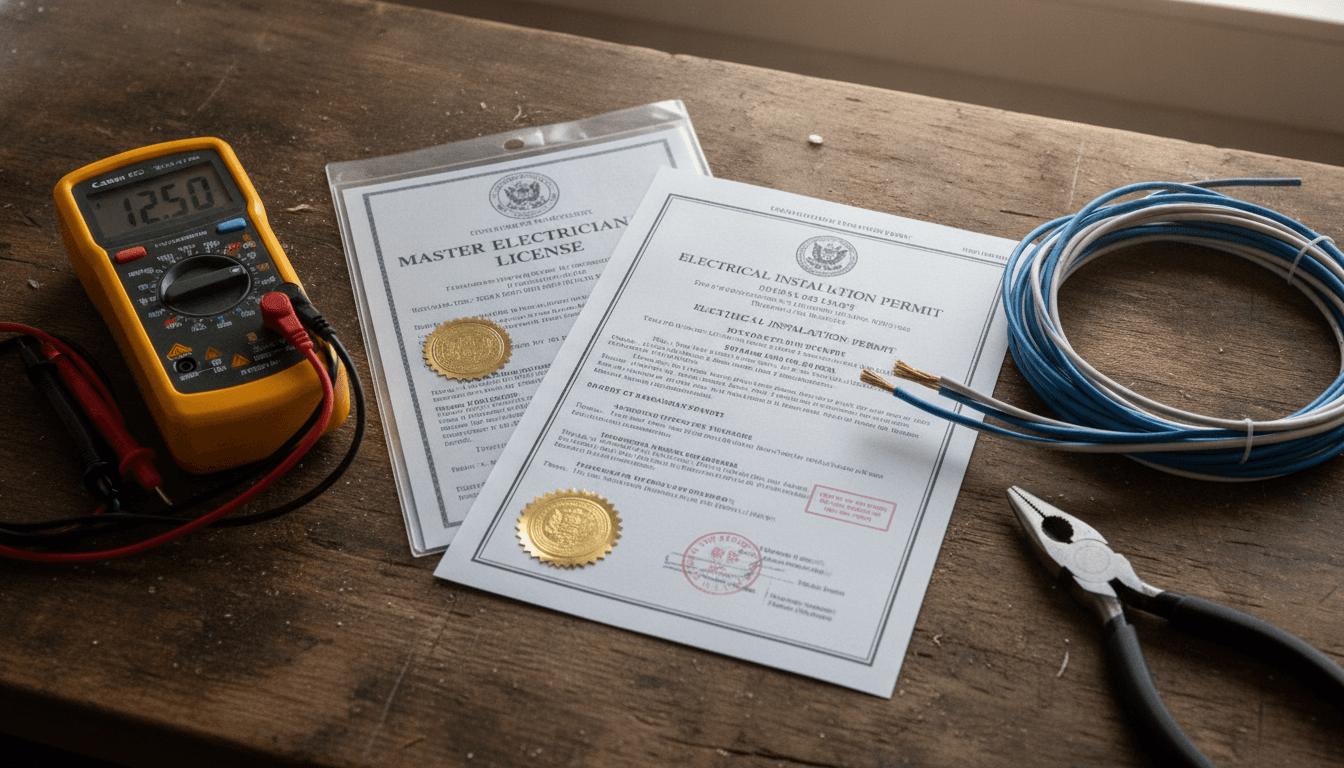
New Jersey requires anyone contracting electrical work to hold a license from the State Board of Examiners of Electrical Contractors, and that license number has to appear on the truck, the business card, and the estimate. If it is missing from any of those three places, you already have your answer about that company.
That rule exists because the state's housing is older than most people realize. A large share of homes in towns like Montclair, Westfield, Haddonfield, and Red Bank were built before 1940, and it is still common to open a wall and find knob-and-tube wiring, cloth-insulated cable, or a 60-amp fuse panel feeding a house that now runs central air and two EV chargers.
Choosing the right electrician in New Jersey comes down to three questions. Are they licensed and permitted to work in your municipality, have they done your specific type of job before, and does their written estimate say what happens if the inspector asks for changes? Everything else is detail.
Start With the License and the Business Permit
New Jersey issues two things to a legitimate electrical contractor: a license to the individual who passed the state exam, and a business permit to the company that individual runs or is employed by. Both must be current. You can look up either one on the Division of Consumer Affairs website in about a minute, and a contractor who hesitates when you ask for the numbers is telling you something.
Journeymen and apprentices can work on your house, but only under a licensed electrical contractor. It is normal for the person on the ladder to be an employee rather than the license holder. What matters is that the company itself holds the business permit and that the license holder is responsible for the job.
Handymen and general contractors are a gray area that costs homeowners money every year. Under state law, a general contractor cannot legally perform electrical work beyond replacing a fixture or a device on an existing circuit. If your kitchen remodel includes new circuits, the general contractor should be subcontracting to a licensed electrical contractor, and you should ask who that is.
Insurance is the second document to request. Ask for a certificate of general liability with your name listed as certificate holder, plus proof of workers' compensation if the company has employees. A contractor working out of a pickup with no insurance is cheap right up until a fire or an injury on your property.
Match the Electrician to the Job You Have
An electrician who spends every day wiring new construction in Monmouth County may not be the right fit for a 1910 Victorian in Cape May with plaster walls and original fixtures. Residential service work, panel upgrades, EV charger installs, generator hookups, and old-house rewiring are related skills, but companies specialize, and the ones that do your kind of job every week will quote it faster and finish it cleaner.
Panel upgrades are the most common big-ticket job in New Jersey right now. A 100-amp to 200-amp upgrade typically runs $2,200 to $4,500 in 2026, and the price depends on whether the utility service drop has to change. Ask the electrician how they coordinate with PSE&G, JCP&L, Atlantic City Electric, or Rockland Electric, because the disconnect and reconnect scheduling is what turns a one-day job into a two-week wait.
EV charger installation is the second most common request, and it is a good test of a contractor's habits. A Level 2 charger on a dedicated 50-amp circuit runs $700 to $1,800 installed depending on the distance from the panel. A good electrician will ask about your panel's current load before quoting, because plenty of older homes cannot add a 50-amp circuit without an upgrade first.
Old-House Work in North Jersey and the Shore
Knob-and-tube wiring is still active in thousands of homes in Essex, Union, Bergen, and Hudson counties. Insurance carriers increasingly refuse to write a policy on a house with it, which is why so many buyers discover the problem at closing. Full rewiring of a 2,000 square foot house runs $12,000 to $25,000 and takes one to two weeks, so this is a job for a company that has done dozens of them.
Shore towns carry their own issues. Homes in Long Beach Island, Manasquan, and Ocean City that flooded in 2012 often have replacement panels that were installed quickly, and some were never inspected. A contractor who works the shore regularly will know to look for corroded bus bars and improperly elevated equipment before quoting anything else.
Generators and Storm Work
After the last several years of outages, standby generator installation has become routine for New Jersey electricians. A whole-house natural gas generator with an automatic transfer switch typically costs $9,000 to $16,000 installed, and the electrical portion requires a permit plus coordination with your gas utility.
Ask any generator installer for two recent local references. This is a job where the electrical work, the gas line, and the concrete pad all have to line up, and a company that has only done a handful will make mistakes on sequencing.
Permits, Inspections, and Why They Protect You
Almost every electrical job beyond swapping a fixture requires a permit through your municipality's construction office under the New Jersey Uniform Construction Code. The electrician pulls it, the town's electrical subcode official inspects the work, and the permit closes when it passes. That inspection is a free second opinion on your contractor's work, paid for by the permit fee.
Permit fees in New Jersey vary by town but typically run $75 to $250 for a panel upgrade or a new circuit. Any contractor who suggests skipping the permit to save you that fee is asking you to take on the risk of an uninspected installation, which can surface at resale or during an insurance claim.
Ask how the electrician handles a failed inspection. The right answer is that they return, correct the issue at no additional charge, and schedule the reinspection.
Get that in writing on the estimate. A contractor who charges for return trips after their own work fails inspection is not one you want.
Reading an Estimate and Comparing Bids
Three written estimates is the standard advice, and it holds for anything over $1,000. In New Jersey the spread between the highest and lowest bid on a panel upgrade is often $1,500 or more, and the low bid is not automatically the problem. It may reflect a company that does forty panels a month and has the process down.
A useful estimate lists the materials by brand and rating, states who pulls the permit, includes the utility coordination, and gives a start date and a completion window. It should also state the warranty on labor, which for most reputable New Jersey electricians is one to two years, with the manufacturer covering the equipment.
Here are the warning signs that should end a conversation:
- No license number on the estimate, the vehicle, or the website
- A request for more than a third of the total as a deposit before any work starts
- A suggestion that the job does not need a permit when it clearly does
- A quote given over the phone for a panel upgrade without seeing the panel
- Pressure to sign today because the price goes up tomorrow
Reviews matter, but read them for patterns rather than star counts. Look for mentions of inspections passing on the first visit, of the crew cleaning up, and of how the office handled a scheduling change. You can compare licensed companies near you through our New Jersey electricians directory, and our home improvement blog covers related projects like panel upgrades and whole-house surge protection.
What Electricians Charge in New Jersey
Hourly rates for a licensed electrician in New Jersey typically fall between $95 and $160 in 2026, with the northern counties near New York City at the higher end. Most companies also have a service call minimum of $150 to $250 that covers the first hour and the trip.
Small jobs are often priced flat. Replacing a ceiling fan runs $150 to $350, adding a new outlet costs $200 to $400 depending on wall access, and installing a dedicated 20-amp kitchen circuit runs $350 to $700. Whole-house surge protection at the panel is $300 to $600 installed and is worth asking about while the panel is already open.
Frequently Asked Questions
Does a New Jersey electrician need a separate license for each town?
No. The state license and business permit are valid statewide. What changes town to town is the permit fee and the inspection schedule, and some municipalities require the contractor to register locally before pulling a permit.
Can I do my own electrical work in New Jersey?
Homeowners may do electrical work on their own single-family primary residence, but a permit and inspection are still required, and the work has to meet code. Most people find that the inspection process is easier when a licensed contractor is on the permit.
How long does a panel upgrade take in New Jersey?
The electrical work itself is usually one day. The full timeline is often two to three weeks because the utility has to schedule the disconnect and reconnect, and the town inspection has to be booked after the work is complete.
Is an unlicensed electrician always cheaper?
Often by 20 to 30 percent, and that discount disappears the first time an inspector, an insurance adjuster, or a home buyer's inspector looks at the work. Unpermitted electrical work in New Jersey can also delay a sale until it is corrected and inspected.