roofers
How to Choose a Roofer in New Jersey
How to choose a roofer in New Jersey: reading the estimate, checking the 13VH registration and insurance, permits, contract rights, warranties, and 2026 costs.
In This Article
- What a Legitimate New Jersey Roofing Estimate Looks Like
- The Home Improvement Contractor Registration
- Insurance: Liability, Workers' Compensation, and Subcontractors
- The Permit From Your Town's Construction Office
- Contract Terms, Deposits, and Your Right to Cancel
- Warranty Layers and Certified Installers
- Frequently Asked Questions
How to Choose a Roofer in New Jersey
A full asphalt shingle replacement on a 1,800 to 2,200 square foot home in New Jersey typically lands between $11,000 and $18,000 in 2026, and a house with two old layers to tear off and rotted decking can pass $20,000. When an estimate comes in at $7,000 for the same work, something is missing. The path below runs from that first estimate to a signed contract and shows where the missing pieces hide.
New Jersey roofs work harder than most. Shore homes from Cape May to Sandy Hook take sustained wind off the ocean and salt that corrodes fasteners, while houses in Sussex and Morris counties deal with ice dams every February. A large share of the state's housing is 1950s and 1960s Cape Cods and split-levels with original plank or early plywood decking, and on those houses the cheapest bid is often the most expensive roof.
Then there are the out-of-state plates. After every major storm, crews from Texas, Florida, and the Carolinas set up in New Jersey for a few months, knock on doors, and leave before the first warranty claim. Each step below is built to filter them out.
What a Legitimate New Jersey Roofing Estimate Looks Like
A real estimate names the shingle by brand and product line, never just "30-year architectural shingles." You should see GAF Timberline HDZ, Owens Corning Duration, or CertainTeed Landmark written out, along with the underlayment, the ice-and-water membrane, the ridge vent, and the drip edge, each with a brand. Vague material descriptions let a contractor swap in a cheaper product after you sign.
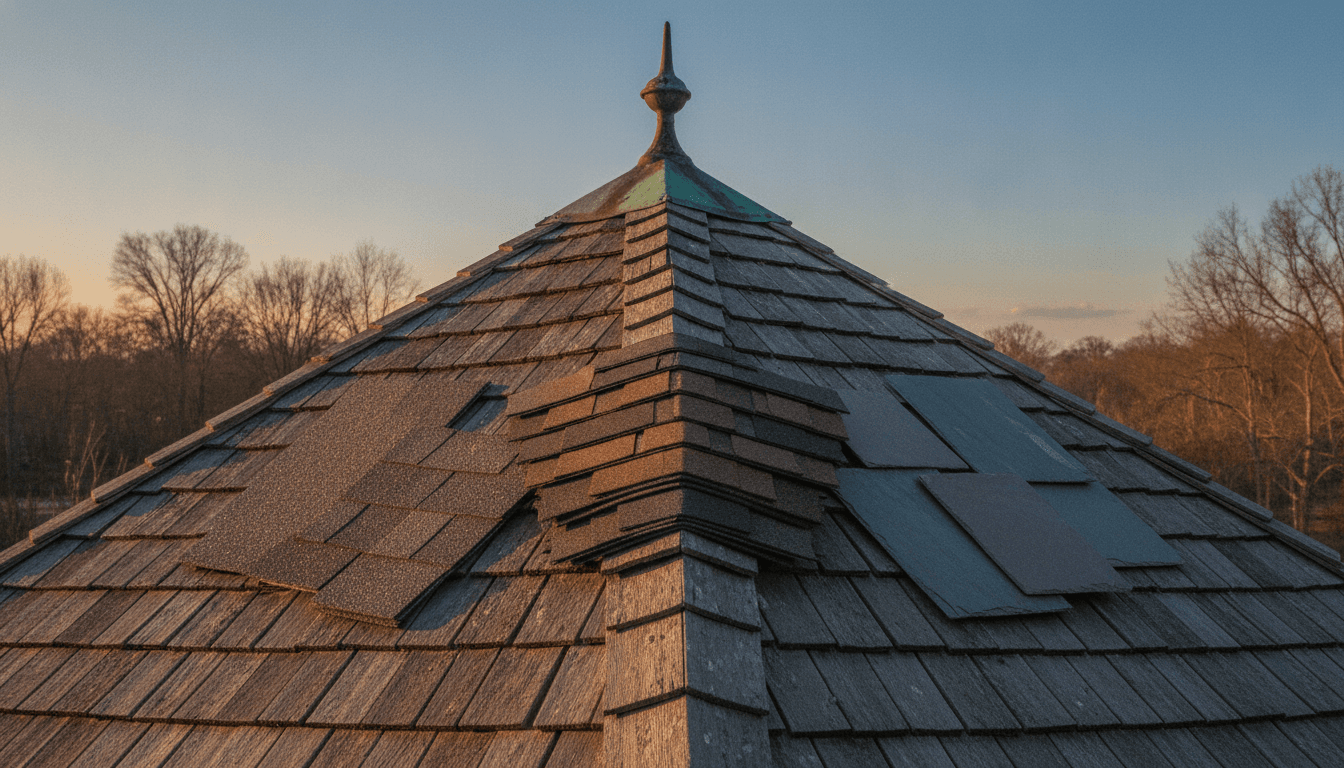
The estimate should state whether the job is a tear-off or an overlay. New Jersey follows the International Residential Code, which allows a maximum of two layers of asphalt shingles, so a house that already has two layers must be stripped to the deck. Even where an overlay is legal, it hides deck rot, adds weight, and voids most manufacturer warranties.
Ice-and-water shield coverage should be spelled out in feet. The residential code calls for an ice barrier along the eaves that extends at least 24 inches inside the exterior wall line, which on a low-slope Cape Cod with wide overhangs means two full courses of membrane, plus coverage in valleys and around chimneys and skylights. A Sussex County roofer who has dealt with ice dams will often run the membrane six feet up the eave without being asked.
Ventilation should come with a specific plan for intake at the soffits and exhaust at the ridge, because most 1950s houses have neither. It should also carry a permit line item with the municipality named, and decking replacement priced per sheet, typically $75 to $150 per 4-by-8 sheet installed, with a stated allowance.
Where the Numbers Should Land
An 1,800 to 2,200 square foot New Jersey home carries roughly 22 to 30 squares of roof once you account for pitch, overhangs, and waste, and a registered crew charges about $450 to $700 per square for architectural shingles with a single-layer tear-off. That puts the base job at $11,000 to $18,000 before decking. Steep pitches, dormers, and wind-rated installations at the Shore push toward the top of that range.
A bid under $8,000 for a full tear-off on a house that size is a lowball. The gap usually comes from skipping the tear-off, using leftover or off-brand shingles, running a crew without workers' compensation, or never pulling the permit, and each of those shows up somewhere in the steps that follow. Compare these figures with our other home repair cost guides before you sign anything.
The Home Improvement Contractor Registration
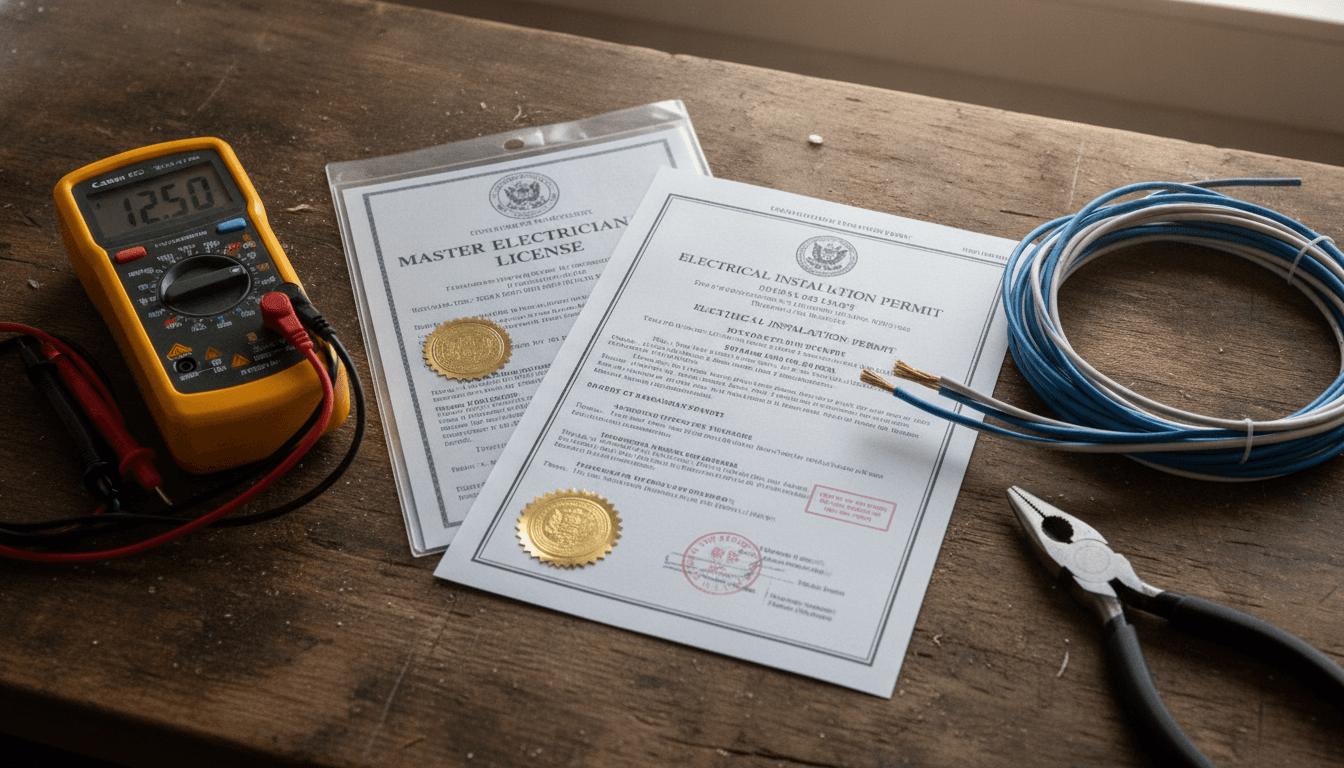
Every contractor who does home improvement work in New Jersey must be registered with the Division of Consumer Affairs under the Contractors' Registration Act, and roofing counts. The registration number starts with 13VH and must appear on the contract, on advertising, and on the contractor's vehicles. If the truck in your driveway has no number on the door, that is your answer.
Registration is not a skills test. It confirms the business disclosed its owners, carries the required liability insurance, and has not been barred from operating in the state. New Jersey has been moving contractors toward a licensing system with exam and experience requirements under a new state board, and the lookup on the Division's website remains the place to confirm a roofer is in good standing.
Check the number yourself. Search the Division of Consumer Affairs verification page by business name and confirm the name matches the contract, the address is in New Jersey, and the status is active. Storm chaser crews sometimes borrow a local company's number or use a name one letter off from a legitimate firm.
Insurance: Liability, Workers' Compensation, and Subcontractors
Ask for a certificate of insurance that names you as the certificate holder, with your address printed on it. New Jersey registration requires a general liability policy of at least $500,000 per occurrence, and a serious roofer carries $1 million or more. A two-minute call to the agent listed on the certificate confirms the policy is active and covers roofing.
Workers' compensation is the coverage that protects you directly. If a worker falls from your roof and the company has no workers' compensation policy, the injured worker's lawyer looks at your homeowner's policy next. New Jersey requires workers' compensation for any business with employees, and the certificate should show it as a separate line with its own policy number.
Subcontractor crews change the math. Many New Jersey roofing companies sell the job and then hand the work to a subcontracted crew, and the company's workers' compensation may not extend to those workers. Ask whether the crew will be employees or subcontractors, and if subcontractors, ask for their certificate of insurance too.
The Permit From Your Town's Construction Office
New Jersey enforces the Uniform Construction Code through each municipality's construction office, and the construction official, never the roofer, decides what needs a permit. A like-for-like shingle replacement on a detached one- or two-family house is treated as ordinary maintenance in many towns, but the moment the job includes replacing decking, changing the roof structure, adding or removing skylights, or reroofing a townhouse or multi-family building, a permit is required.
On a 1955 Cape Cod in Bergen County or a 1962 split-level in Middlesex County, nobody knows the condition of the decking until the shingles come off, and rotted plank sheathing along the eaves is common. A roofer who declares before the tear-off that no permit will be needed is guessing, and one who tells you to skip it to save $150 is telling you how they handle everything else.
Permit fees in most New Jersey towns run roughly $75 to $300 for a residential roof, based on the estimated cost of the work, and the construction office sends an inspector to check the decking, the ice barrier, and the flashing before the shingles cover them. That inspection is free quality control the roofer cannot skip, and the permit record becomes part of the house's file when you sell.
Contract Terms, Deposits, and Your Right to Cancel
New Jersey law requires a written contract for any home improvement job over $500, and it must include the contractor's legal name and address, the 13VH registration number, the total price, a description of the work and materials, the start and completion dates, and a notice of your cancellation rights. A contract missing any of those items is out of compliance, and it tells you the contractor does not know the rules.
When a contractor comes to your home and you sign there, New Jersey gives you three business days to cancel a home-solicitation contract for any reason, and the contract must say so in writing. That right exists for the pushy post-storm pitch where the price "expires tonight." Use it if you need a day to check the registration and call the insurance agent.
Ten to thirty percent at signing is the normal deposit, with the balance due on completion and a passed inspection, and a roofer who wants half or more up front is financing the previous job with your money. Materials should be on your driveway before any second payment, and never pay cash without a receipt tied to the contract.
If the job is storm damage, the contract should be between you and the roofer, with the insurance payout going to you. A contractor who offers to "waive" your deductible is proposing insurance fraud in most cases, and one who asks you to sign an assignment of benefits is taking control of your claim.
Warranty Layers and Certified Installers
Every shingle comes with a manufacturer material warranty, usually called a limited lifetime warranty, and it covers manufacturing defects only. Most provide full replacement cost for the first ten years and then prorate, and none cover installation errors, which is where most roof failures come from. Read the exclusions before the word lifetime impresses you.
The workmanship warranty comes from the roofer, and it is the one that matters on a New Jersey roof. Two years is the floor, five years is common, and ten years is a sign of a company that plans to stay in business. A storm chaser's 20-year workmanship warranty is worth nothing once the truck crosses the Delaware Memorial Bridge heading south.
Manufacturer-certified installer programs combine the two layers. GAF Master Elite, Owens Corning Platinum Preferred, and CertainTeed SELECT ShingleMaster contractors can sell enhanced system warranties that cover both materials and workmanship for 25 to 50 years, backed by the manufacturer rather than the roofer. Those programs require a full system of matching components and factory inspections, and only a small share of registered roofers in New Jersey qualify.
Most architectural shingles are rated for 110 to 130 mph winds when installed with six nails per shingle and the manufacturer's starter and ridge products. Ask the roofer to write that nailing pattern into the estimate for a home in Ocean or Monmouth County.
Frequently Asked Questions
How many estimates should I get for a roof in New Jersey?
Three from registered New Jersey companies with 13VH numbers, and ideally two of them from within 30 minutes of your house. Local roofers know which towns want a permit for a straight replacement and which construction officials insist on inspecting the ice barrier.
Can I check a roofer's registration number online?
Yes, through the Division of Consumer Affairs license verification search, where the 13VH number should show an active status and a business name that matches your contract. The search takes about two minutes and also shows whether the company has been disciplined.
Should I replace the decking or just the shingles?
Replace any sheathing that is soft, delaminated, or has gaps wider than a quarter inch between planks, which describes a lot of eave lines on 1950s Cape Cods. A typical replacement on that era of house runs 4 to 10 sheets, or about $400 to $1,500 in extras.
Is a roof overlay ever a good idea in New Jersey?
Rarely. An overlay saves $1,500 to $3,000 in tear-off labor and disposal, but it voids most manufacturer warranties, hides deck damage, and has to come off with the original layer at the next replacement, doubling the disposal cost.